The case for planning it
Every business with overhead doors has a choice. Maintain them on a schedule, or repair them when they break.
The second approach feels cheaper until you add it up. A spring breaks at 7 a.m. with three trucks waiting. A door comes off its track and takes two sections with it. An operator burns out because the door has been ten per cent too heavy for a year. The repair bill is the small part. The larger costs are the idle bay, the late shipments, the staff standing around and the building that can't be locked tonight.
Commercial door parts wear at a predictable rate. Springs are rated in cycles. Rollers, bearings and cables degrade visibly. A technician who looks at them on a regular schedule can tell you what's got a year left and what's got a month. That's the whole idea: replace parts when it suits you, not when they choose.
What a maintenance visit covers
- Door balance
- Operator disconnected, door moved by hand or chain. An out-of-balance door is the leading cause of operator and hardware wear.
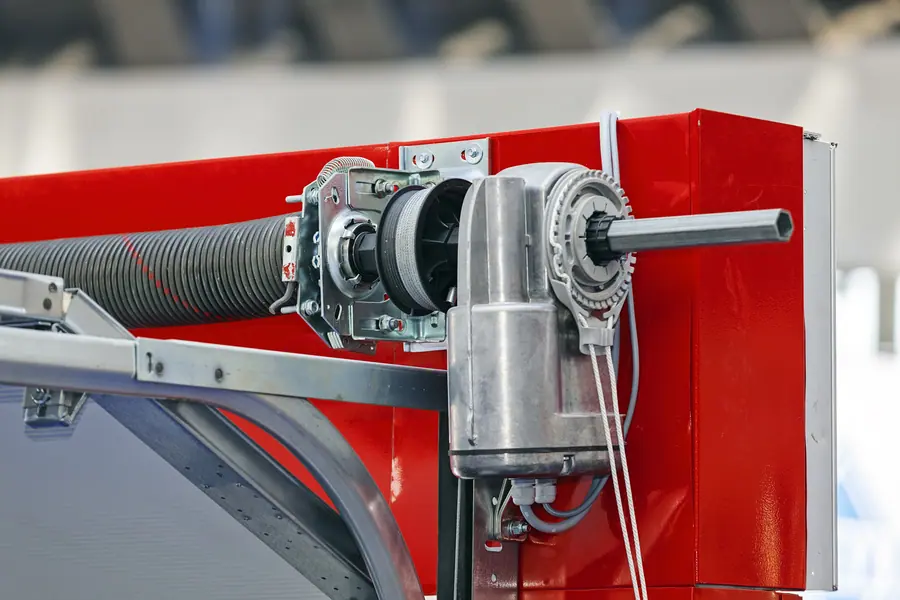
- Springs
- Inspected for corrosion, deformation and gaps; cycle life assessed against usage; tension adjusted.
- Shaft, bearings and couplers
- Checked for wear, play and alignment.
- Drums and cables
- Fraying, corrosion, seating and equal tension.
- Track
- Alignment, plumb, bracket fixings and damage from impacts.
- Rollers
- Bearings and wheels; replaced where worn.
- Hinges, struts and fasteners
- Cracks, loose fixings, missing hardware.
- Sections
- Dents, cracks, delamination, rust and damaged vision lites.
- Weather seals
- Bottom astragal, jamb, header and section seals.
- Operator
- Motor, brake, clutch, drive chain, gear reducer, limit settings and mounting.
- Controls
- Push-button stations, key switches, radio controls and interlocks.
- Safety devices
- Photo-eyes and sensing edges tested with the door in motion.
- Manual operation
- Hand chain, release and locks.
- Lubrication
- Springs, bearings, hinges, rollers and operator drive, with products suited to the environment.
- Rolling doors
- Guides, endlocks, bottom bar, barrel tension and hood.
- Dock equipment
- Dock seals and shelters, where applicable.
What you receive
After each visit you get a written report, door by door.
Each door identified by location, with its overall state.
Adjustments, lubrication and minor repairs done during the visit.
Items that need attention, ranked by urgency, with prices.
Parts nearing the end of their life — particularly springs — so you can budget.
Confirmation that reversing devices were tested and their result.
Over time those reports build into a history for each opening. Patterns show up: the door that eats springs, the dock position that's hit every quarter. That's useful information for decisions about upgrades.
How often should commercial doors be serviced?
There's no single answer. It depends on how hard the doors work.
- Low use — a few cycles a day, such as storage buildings and seasonal farm sheds: once a year
- Moderate use — service bays, shop doors, typical warehouse doors: twice a year
- High use — busy docks, parking facilities, fire stations, distribution centers: quarterly, or by cycle count
- Harsh environments — wash bays, salt storage, food processing: more often regardless of cycles
For doors with cycle counters on their operators, we can plan spring replacement by the numbers.
Setting up a program
- SurveyWe walk the site, list every door with its type, size, operator and current condition.
- BaselineEach door is inspected and any urgent issues flagged.
- ScheduleVisit frequency agreed, door by door if they differ.
- TimingVisits arranged around your operations — before a busy season, outside peak hours, one opening at a time.
- ServiceEach visit covers the checklist above.
- Report and planYou get findings and a forecast after every visit.
- ReviewOnce a year we look at the history together and adjust the plan.
Common findings on unmaintained doors
When we take on a site that hasn't had regular service, the same things turn up.
- Springs well past their rated life, often with one of a set already broken
- Doors significantly out of balance, with operators straining
- Cables frayed at the bottom brackets
- Seized end bearings on the shaft
- Rollers worn flat or missing entirely
- Track knocked out of line at forklift height
- Loose or missing fasteners on hinges and track brackets
- Photo-eyes disconnected or sensing edges not working
- Bottom seals torn away
- Operator limits drifted, so doors don't close fully
- No lubrication on anything for years
None of these is unusual. All of them are cheaper to correct in a planned visit than after a failure.
What your own staff can do
Maintenance isn't only our visits. A minute of attention from the people who use the doors makes a real difference.
- Look and listen daily. A door that sounds different or moves unevenly should be reported.
- Keep the opening clear. Pallets and trash cans against the track cause damage.
- Report impacts immediately, even minor ones. A slightly bent track becomes a derailed door.
- Test safety devices monthly. Break the photo-eye beam or press the sensing edge while the door closes; it should stop and reverse.
- Don't force a stuck door or run an operator against a jam.
- Keep thresholds clear of ice, debris and standing water.
- Never bypass a safety device to keep a door running.
We're happy to walk staff through these during a visit.
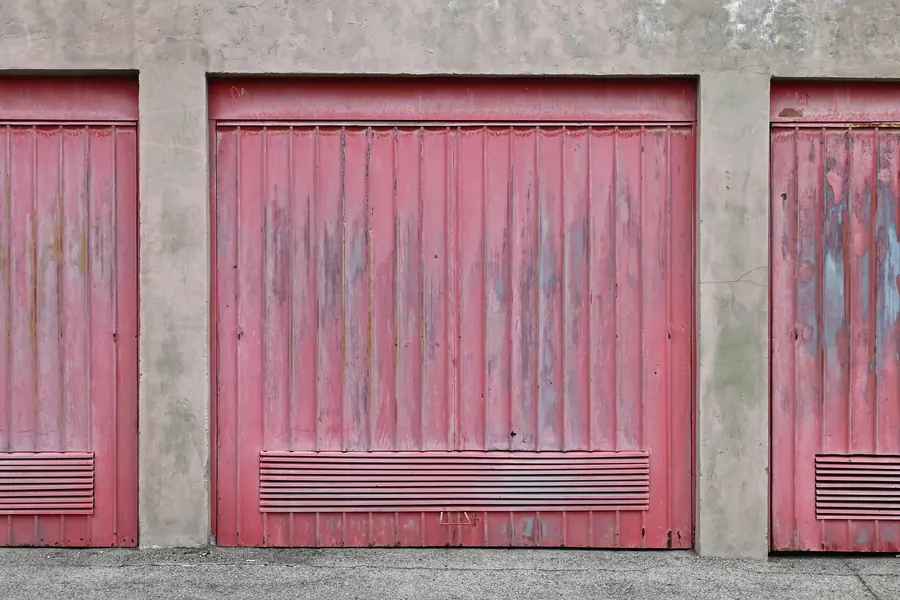
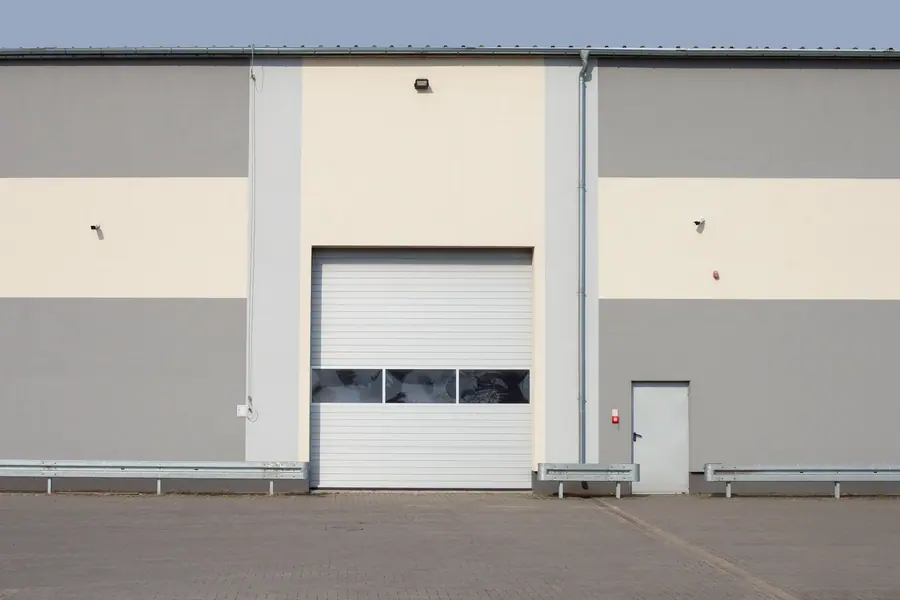 BEFOREAFTER
Before & after
Faded, neglected doors compared with a clean, serviced sectional door
The "before" image shows a set of faded doors in a concrete building, the paint weathered to a chalky pink and streaked with age. Doors left this long have typically had no lubrication, adjustment or inspection in years. They still open, more or less, which is why they've been ignored. Underneath, springs are tired, hardware is dry and seals have perished.
The illustration is of the alternative: a door that's on a maintenance schedule. It's inspected regularly, lubricated, balanced and adjusted, with worn parts changed before they fail and the finish kept in order.
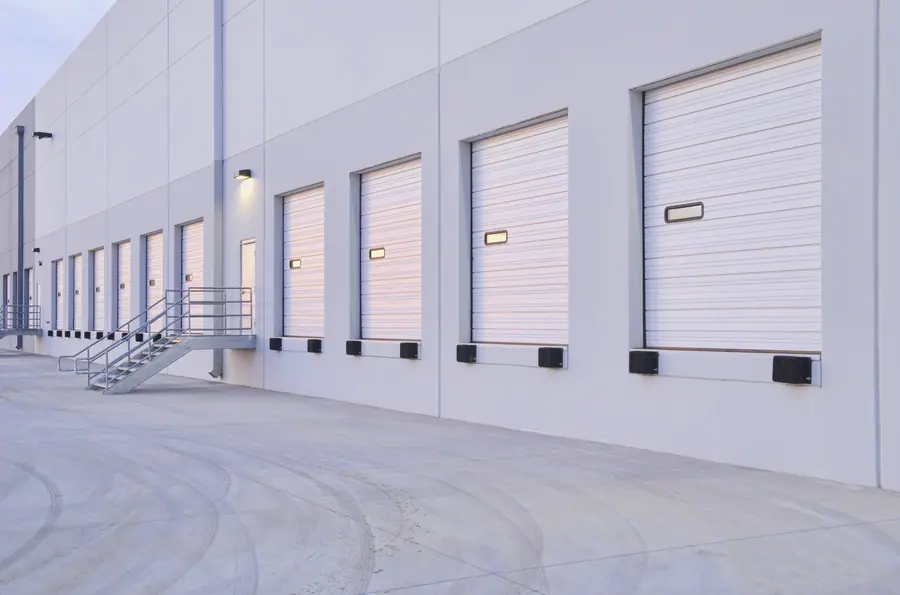
The "after" image shows a commercial building with a clean insulated sectional door, its panels and vision lites intact and its surroundings tidy. For the owner, the value of that isn't cosmetic. It's a door that works every time, an operator that isn't being overworked, a building that seals properly, and a maintenance budget with no nasty surprises in it.
Illustrative exampleThese two photographs are licensed reference images chosen to show the kind of change this service makes. They are not a record of one specific Delafield Garage Door job.
Timing maintenance around Wisconsin's seasons
Local weather gives us a natural calendar.
Early fall is the key visit. Before the heating season, we check and replace seals so the building holds its heat. Before the deep cold, we identify springs near the end of their life, because they're most likely to break in January. Lubricants are refreshed with low-temperature grades. Operator clutches are checked so a frozen door doesn't get torn off its seal.
Spring is the follow-up. Road salt has had months to work on bottom sections, track bases, cables and brackets. We clean, inspect and treat. Frost heave may have shifted slabs and racked openings, so alignment and bottom-seal contact are rechecked.
Agricultural buildings have their own rhythm. A check before planting and another before harvest makes sure the machine-shed doors work when the equipment has to move. These doors often sit idle for weeks and are then needed at five in the morning.
Summer suits larger planned work: door replacements, operator upgrades and repainting.
After severe weather — high winds, ice storms, heavy snow — a quick look at large doors on exposed elevations is worthwhile.
Why a professional program beats an occasional look
In-house maintenance staff are usually capable people with a hundred other responsibilities. Overhead doors need specific knowledge: reading a spring for fatigue, judging cable wear, setting an operator's clutch and limits, and adjusting spring tension safely.
A door technician also carries the parts. Many small repairs get done on the spot during a maintenance visit.
Then there's the record. A documented program, with safety devices tested and logged, supports your obligations for workplace equipment and gives you something concrete to show an insurer or an auditor.
Commercial maintenance questions
How often should commercial doors be serviced?
At least annually for light use, twice a year for typical commercial doors, and quarterly or by cycle count for high-use openings.
Can maintenance be done without disrupting our work?
Yes. We schedule around your hours and work on one opening at a time so others stay available.
Do you provide written reports?
Yes. Each visit produces a door-by-door summary with completed work, recommendations and a forecast of upcoming replacements.
What does planned maintenance cost compared with repairs?
A scheduled visit costs a fraction of an emergency repair plus downtime. We'll quote based on the number and type of doors.
Can you maintain a mix of door types?
Yes. Sectional, rolling steel, sheet doors, dock doors and their operators can all be covered in one program.
Will you replace parts during a maintenance visit?
Minor items are often handled on the spot. Larger repairs are quoted and scheduled at a time that suits you.